This semester, I am taking a graduate course to learn more about instructional coaching and mentoring. Thinking back to when I started teaching in 1994, I was assigned a mentor teacher with whom I rarely had the chance to meet or interact. This was through no fault of my mentor, as she had no off period to focus on working with me, and our conference periods were at different times of the day. Most of our exchanges occurred during hall duty between classes. While I had a strong understanding of my content area, I could have greatly benefited from having an instructional coach to help me learn effective strategies for reaching my struggling students. Over the years I attended professional development programs and conferences, and I honed my craft and learned strategies to support all of my students. However, having a dedicated instructional coach would have made the process of meeting my students’ needs more timely.
The Impact Cycle
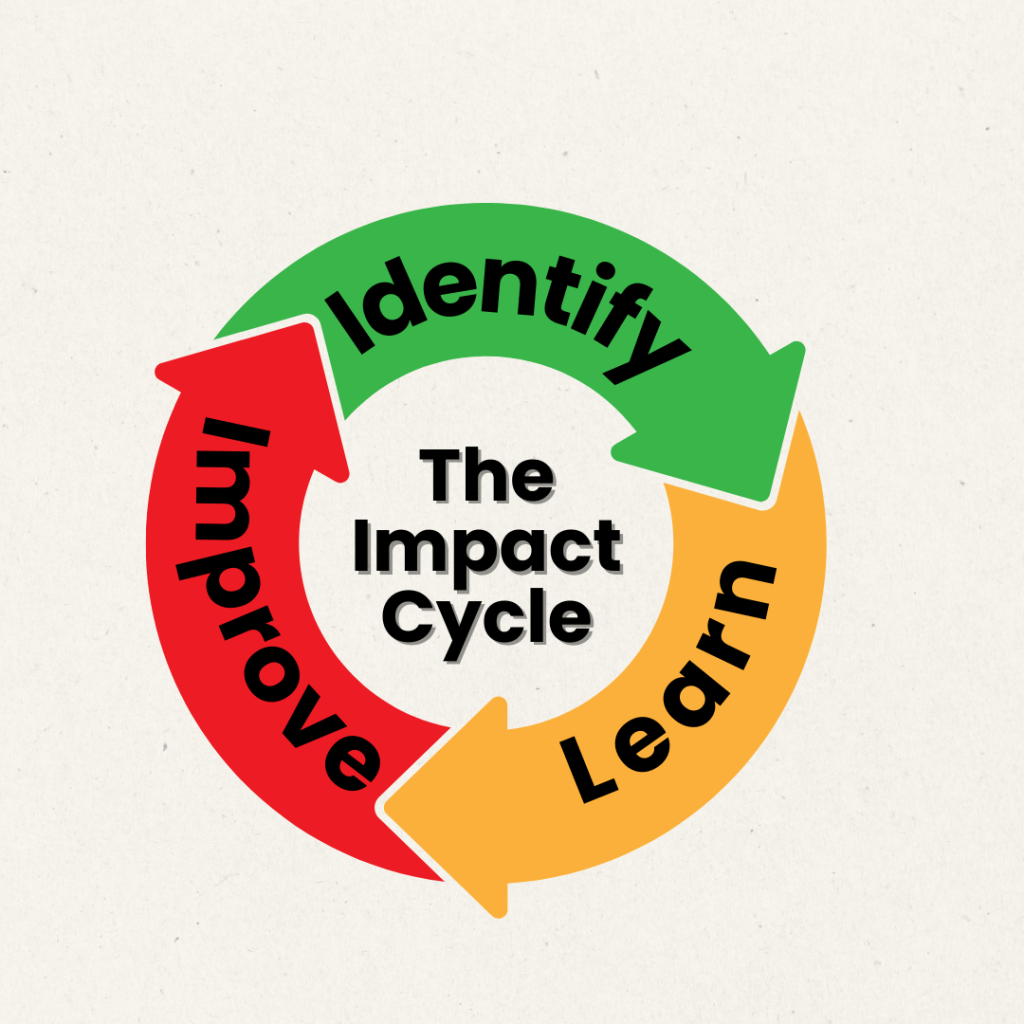
One of the projects I will undertake this semester is engaging in instructional technology coaching with some of the teachers at my school. In preparation for this, I have been learning about the Impact Cycle coaching model. Knight (2018) explains the model as having three parts: Identify, Learn, and Improve.
During the Identify stage, the instructional technology coach (ITC) and teacher work together to understand the current reality of the classroom. Once a clear picture is established, the ITC collaborates with the teacher to set goals. These goals, as well as all final decisions, are made by the teacher. After setting the goals, the ITC and teacher work together to identify potential strategies that could be employed to meet the goals. The final decision about which strategy to use remains with the teacher. The teacher retains their autonomy at all times and has the final say on all decisions.
Now that a goal and strategy have been decided upon, the process moves into the Learn stage. Here, the ITC provides a clear explanation of the strategy chosen by the teacher and offers opportunities for the teacher to see the strategy in practice. It is crucial for the teacher to both hear and observe the strategy being implemented.
The third stage of the cycle is the Improve stage. At this point, the teacher implements the strategy to reach the goal. Collaboration is key during this stage, as the ITC and teacher monitor progress and make adjustments as needed. These adjustments could involve tweaks to the teaching strategy or trying a new approach, effectively restarting the cycle.
Effective Coaching
Knight (2018) outlines seven Partnership Principles that effective ITCs uphold when partnering with teachers: equality, choice, voice, dialogue, reflection, praxis, and reciprocity. These principles are outlined in the infographic below.
Both the Impact Cycle and the Partnership Principles align with effective practices for instructional technology coaching found in the academic literature. Without a doubt, the most crucial practice when entering into a partnership with a teacher is to tailor support to the teacher’s specific needs and goals (Grierson et al., 2022). This concept ties back to the Identify stage of the Impact Cycle. Additionally, when working with teachers to integrate technology into their classrooms, coaches need to understand the teacher’s initial disposition toward technology integration (Ottenbreit-Leftwich et al., 2022).

Collaborative goal-setting is another critical component that helps teachers articulate their needs to set specific, measurable goals (Grierson et al., 2022). This collaboration serves as the impetus for action, leading to the selection of a strategy to achieve the established goals. Effective ITCs model technology integration and often co-teach with teachers (Grierson et al., 2022; Ottenbreit-Leftwich et al., 2022), aligning with the Learn stage of the Impact Cycle. This co-teaching also exemplifies the principle of praxis by implementing practical applications of technology in the classroom. Iterative reflection is another hallmark of effective ITCs (Grierson et al., 2022). Frequent debriefing to discuss successes and areas for improvement aligns with the Improve stage of the Impact Cycle.
Considering the dispositions of effective ITCs, the most critical factor for successful coaching is the ability to build safe, trusting relationships (Grierson et al., 2022). Without a strong ITC-teacher relationship, it is impossible to create a supportive, collaborative learning environment. Another equally important disposition is the ability to be flexible and responsive (Grierson et al., 2022). The needs of each teacher are unique and vary based on the composition of their classes. Flexibility and responsiveness in adjusting strategies based on dialogue and reflection are crucial to helping teachers achieve their goals.
Looking Ahead
As I learn more about the Impact Cycle for coaching, I am gaining confidence in undertaking the instructional technology coaching process with my teachers. I feel that I have a solid grasp of the Partnership Principles and already incorporate many of them into my interactions with the teachers in my building. I look forward to working with my colleagues and learning from one another as we engage in the coaching process.
References
r2ar. (n.d.). Communication [Icon]. The Noun Project. https://thenounproject.com/browse/icons/term/communication/
Coquet, A. (n.d.). Choice [Icon]. The Noun Project. https://thenounproject.com/browse/icons/term/equality/
Coquet, A. (n.d.). Reciprocity [Icon]. The Noun Project. https://thenounproject.com/browse/icons/term/reciprocity/
Cresnar, G. (n.d.). Thinking [Icon]. The Noun Project. https://thenounproject.com/browse/icons/term/thinking/
Grierson, A. L., Gallagher, T. L., & St Hilaire, R. (2022). Forging the role of the digital technology coach: flexibility, responsiveness, and resourcefulness in supporting teacher professional learning. Professional Development in Education, 50(1), 205–220. https://doi.org/10.1080/19415257.2022.2038657
Knight, J. (2018). The impact cycle: What instructional coaches should do to foster powerful improvements in teaching. Corwin, A SAGE Company.
Meiertoberens, L. (n.d.). Equality [Icon]. The Noun Project. https://thenounproject.com/browse/icons/term/equality/
Ottenbreit-Leftwich, A., Liao, Y.-C., Karlin, M., Lu, Y.-H., Ding, A.-C. E., & Guo, M. (2020). Year-long implementation of a research-based technology integration professional development coaching model in an elementary school. Journal of Digital Learning in Teacher Education, 36(4), 206–220. https://doi.org/10.1080/21532974.2020.1804494
Purnomo, E. (n.d.). Action [Icon]. The Noun Project. https://thenounproject.com/browse/icons/term/action/
TheOpenWindow. (2022, September 14). Jim Knight’s Impact Cycles Explained [Video]. YouTube. https://www.youtube.com/watch?v=8i2hAB6JczA
Warhammer. (n.d.). Listening [Icon]. The Noun Project. https://thenounproject.com/browse/icons/term/listening/
 Ed Tech Wolfe
Kevin,
What a true statement when you mentioned about your mentor teacher, through no fault of her own, having the time or ability to coach you when you were a new teacher. This is so extremely common in education today. Administration recognize the importance of coaching and mentoring, especially for new teachers, but rarely are given the resources to help those new teachers. Knight (2018) states, “It is the motivating power of learning and changing for the better that has led thousands of teachers to feel positive and motivated after they have met their goals through coaching.” (p. 14).
Educators recognize that the significance of coaching stretches far beyond just that first year of teaching and will continue to impact teachers for years to come. When teachers have a dedicated instructional coach whose job it is to coach them fully, they benefit and grow from the experience. The influence of coaching on education is not one that should be taken lightly, just as you mentioned.
References
Knight, J. (2018). The impact cycle: What instructional coaches should do to foster powerful improvements in teaching. Corwin, A SAGE Company.
LikeLike