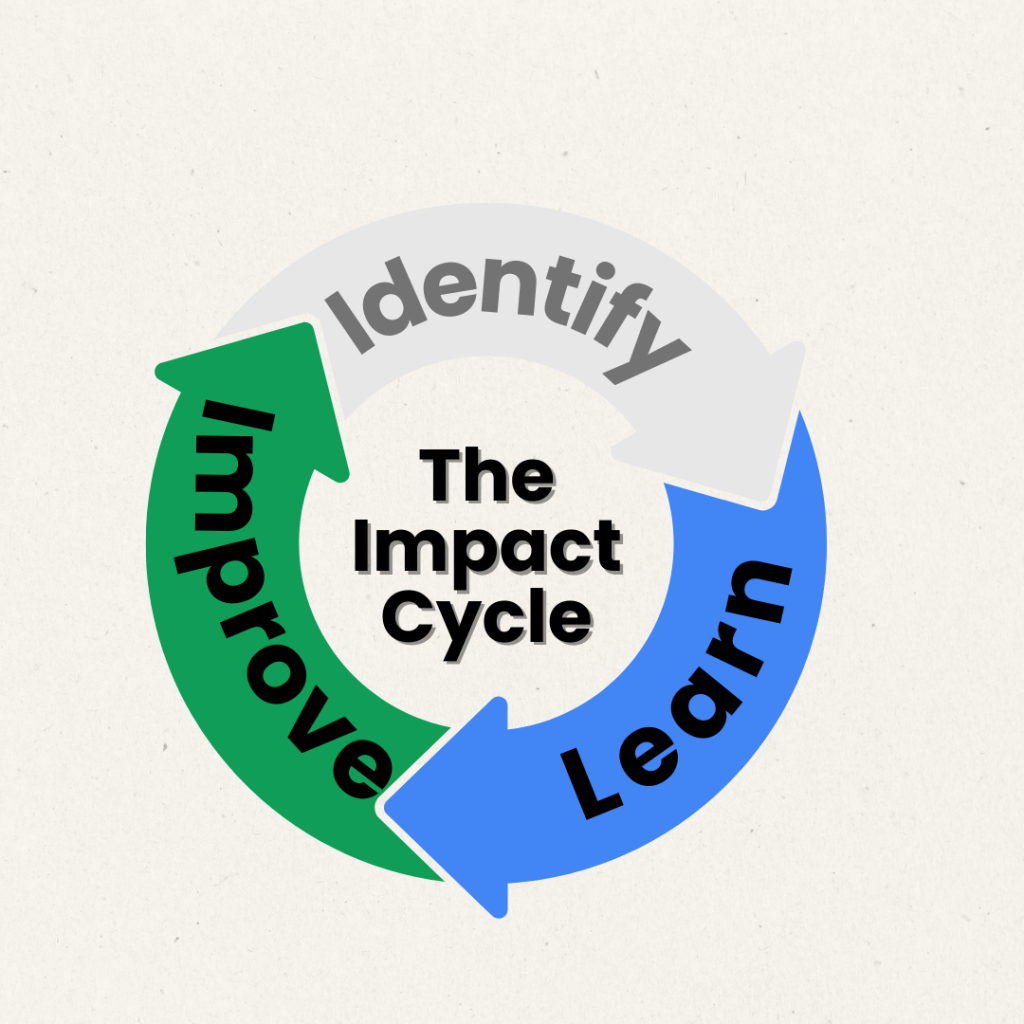
My teaching partner and I have entered the Learn and Improve phases of Jim Knight’s Impact Cycle. After setting clear instructional goals and discussing various options, I provided my teaching partner with checklists to guide them in implementing the strategies we discussed. This post provides an insight into our journey.
Learn Phase: Utilizing Checklists
Checklists are invaluable tools for coaches introducing new teaching practices. They distill complex practices into essential steps, making them easier for teachers to process and implement effectively (Knight, 2018). Their concise format facilitates understanding and ensures consistency in applying instructional strategies. Jim Knight provides a brief explanation of checklists in the video below. Checklists are widely used in other fields like medicine and aviation, where they enhance safety and adherence to protocols (Kumar, 2024). Similarly, in education, checklists support teachers in maintaining focus on instructional goals, helping students to reach those goals.
To support my teaching partner, I created a set of checklists to align with our goals and selected learning activities. In previous years, my partner had noted that students often struggled with Animal Farm due to limited background knowledge of the Russian Revolution, World War II, and key political figures of the era, hindering their grasp of the novel’s satirical and allegorical dimensions. To address this, we decided students would create a glossary of key political figures and concepts, with connections to the novel’s characters and events. The teacher would facilitate this by designing a Choice Board of curated resources, providing hyperlinks to age-appropriate, high-quality materials. This glossary would be a “living document,” with frequent check-ins to refine connections as students deepen their understanding of the historical context and its portrayal in the text. This resource will culminate in a reflective essay at the end of the unit.
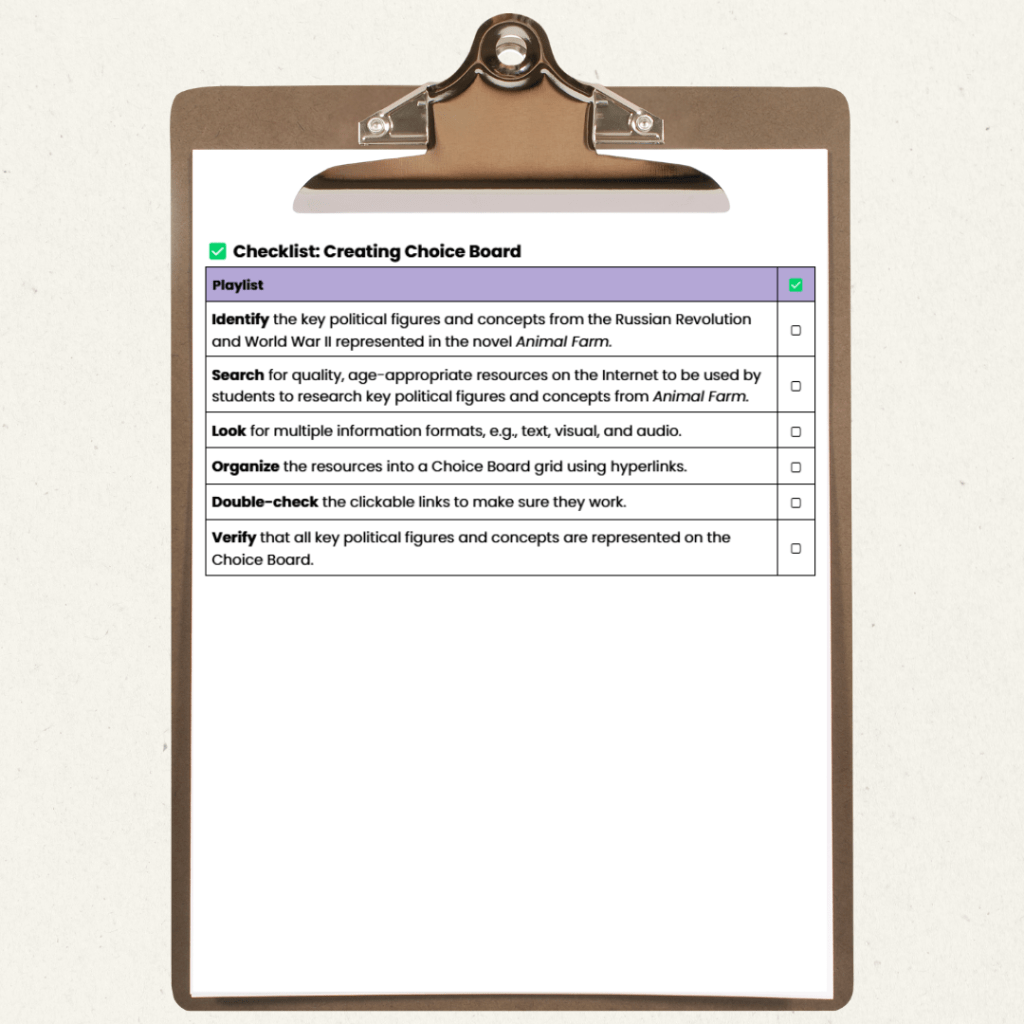
You can see the checklists I created for my teaching partner by clicking the image to the left. I did a modification of a Learning Map. Initially, I intended to use only the “Checklist: Choice Board/Glossary.” However, after further discussions, my teaching partner and I identified the need for additional checklists focused on designing the Choice Board, daily integration of the Choice Board and glossary, and using the Choice Board as a review tool for the reflective essay. After sharing these checklists, we rehearsed these strategies during our planning period.
Improve Phase: Putting Strategies into Action
The Improve Phase of Knight’s (2018) Impact Cycle comprises four steps: Confirm Direction, Review Progress, Invent Improvements, and Plan Next Actions. As I read about this phase, I found myself comparing it to a well-planned vacation. Just as one would outline travel plans, destinations, and activities beforehand, the first step, Confirming Direction, requires setting a clear path forward. During the journey, travelers evaluate how well the trip is going, akin to Reviewing Progress. If needed, adjustments are made to enhance the experience, representing the Invent Improvements step. Finally, each leg of the journey concludes with a plan for the next, reflecting Plan Next Actions.
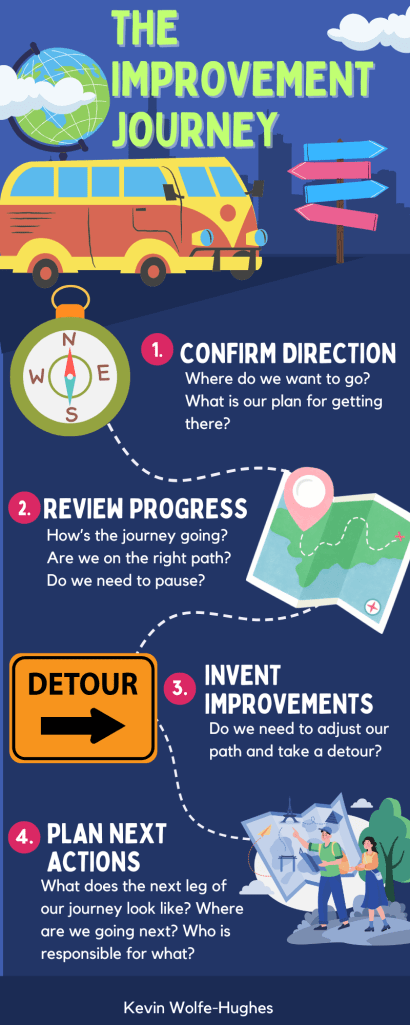
In our Improve Phase, we recognized the need for greater intentionality in having students use their Choice Boards and glossaries to make meaningful connections with their reading. As students progressed, their understanding of historical concepts naturally deepened, paralleling the novel’s character development. Daily check-ins facilitated discussions around the glossary, prompting students to refine their descriptions and recognize the glossary’s practical value in supporting their learning.
Closing Thoughts
I look forward to observing how well students demonstrate their understanding of the satirical and allegorical elements of Animal Farm and how they apply this understanding to current politics in their reflective essays. This coaching experience has been enriching, expanding my knowledge of content beyond my teaching area. The collaboration and reflective practice inherent in the coaching process have been energizing for both my teaching partner and me.
References
Instructional Coaching Group. (2024, May 14). The Impact Cycle: Learn Stage – Checklists [Video]. YouTube. https://www.youtube.com/watch?app=desktop&v=KOFfVO5p3vk
Knight, J. (2018). The impact cycle: What instructional coaches should do to foster powerful improvements in teaching. Corwin, A SAGE Company.
Kumar, P. I. (2024). The checklist protocol. IJVES Case Reports, 2(1), 1–2. https://doi.org/10.4103/ijcr.ijcr_3_24
 Ed Tech Wolfe
Kevin,
In my own experience working with a partner teacher, I worked to apply checklists to increase clarity on my suggestions for teaching practices. However, I faced a bit of a challenge because our focus was on using MagicSchool AI to improve instruction, rather than on students using tech to enhance their learning directly. The checklist helped us stay organized and consistent with integrating MagicSchool tools, but I struggled to adapt it to focus more on student-centered learning goals. It felt like we were missing that direct impact on the students’ experience with technology.
Knight (2018) explains that checklists allow coaches to be clearer when guiding teachers through teaching practices, which ultimately benefits student learning. Similarly, as Knight (2019) notes, checklists can simplify instructional strategies for teachers by breaking down tasks into clear steps, enabling them to implement practices more effectively while still tailoring them to their classroom needs. Even though our checklist was centered around teacher tasks, this structured approach indirectly supported student learning by helping us focus on delivering improved instruction. By supporting my partner teacher’s completion of these tasks, we were able to create a more consistent and targeted learning experience for students—even if they weren’t directly using the technology themselves.
By the way, I loved reading your visual on the Improvement Journey. Great way to think about how the process of coaching goes.
-Tanishia Smith
References
Knight, J. (2019). Instructional coaching for implementing visible learning: A model for translating research into practice. Education Sciences, 9(2), 101. https://doi-org.ezproxy.montevallo.edu/10.3390/educsci9020101
Knight, J. (2018). The impact cycle. What instructional coaches should do to foster powerful improvements in teaching. Corwin.
LikeLike
Kevin,
I loved how you were able to not only come up with a great plan to work with your teaching partner, but that you saw the need to adapt and change what you decided upon. That is so important in the coaching process. Coaches need to be able to see a problem in their plans and brainstorm a way to alleviate the issue(s). Nothing ever goes smoothly the first time around. That would be a miracle! The Instructional Group (2024) states, “…the checklists we describe are tools, created in an environment of partnership, to help teachers get better at what they do”. (Instructional Coaching Group, 2024). I love the idea of checklists as a tool that can be molded and changed to what we need and what can best fit our purpose. Knight (2018) mentions, “One important role the coach plays while reviewing progress is to provide support when teachers start to doubt that they will hit their goal.” (p. 136). Coaches have to go with the flow when they are leading a teaching partner. They have to be able to adapt and provide the support that their partner may need in times of doubt or uncertainty. That is the goal of effective coaching – to facilitate community between the coach and the partner where change can occur.
References
Instructional Coaching Group. (2024, August 14). Everything you’ve heard about checklists is wrong. https://www.instructionalcoaching.com/everything-youve-heard-about-checklists-is-wrong/
Knight, J. (2018). The impact cycle: What instructional coaches should do to foster powerful improvements in teaching. Corwin, A SAGE Company.
LikeLike
The comparison of the Improve phase to a vacation or journey is really on spot! Thank you for including some insight into your own recent experience with coaching. The true ‘partnership’ approach is evident in what you shared and the effort you put into customizing the checklists.
LikeLike